Term o’ the day: mutual forbearance (a.k.a. firmly liberal

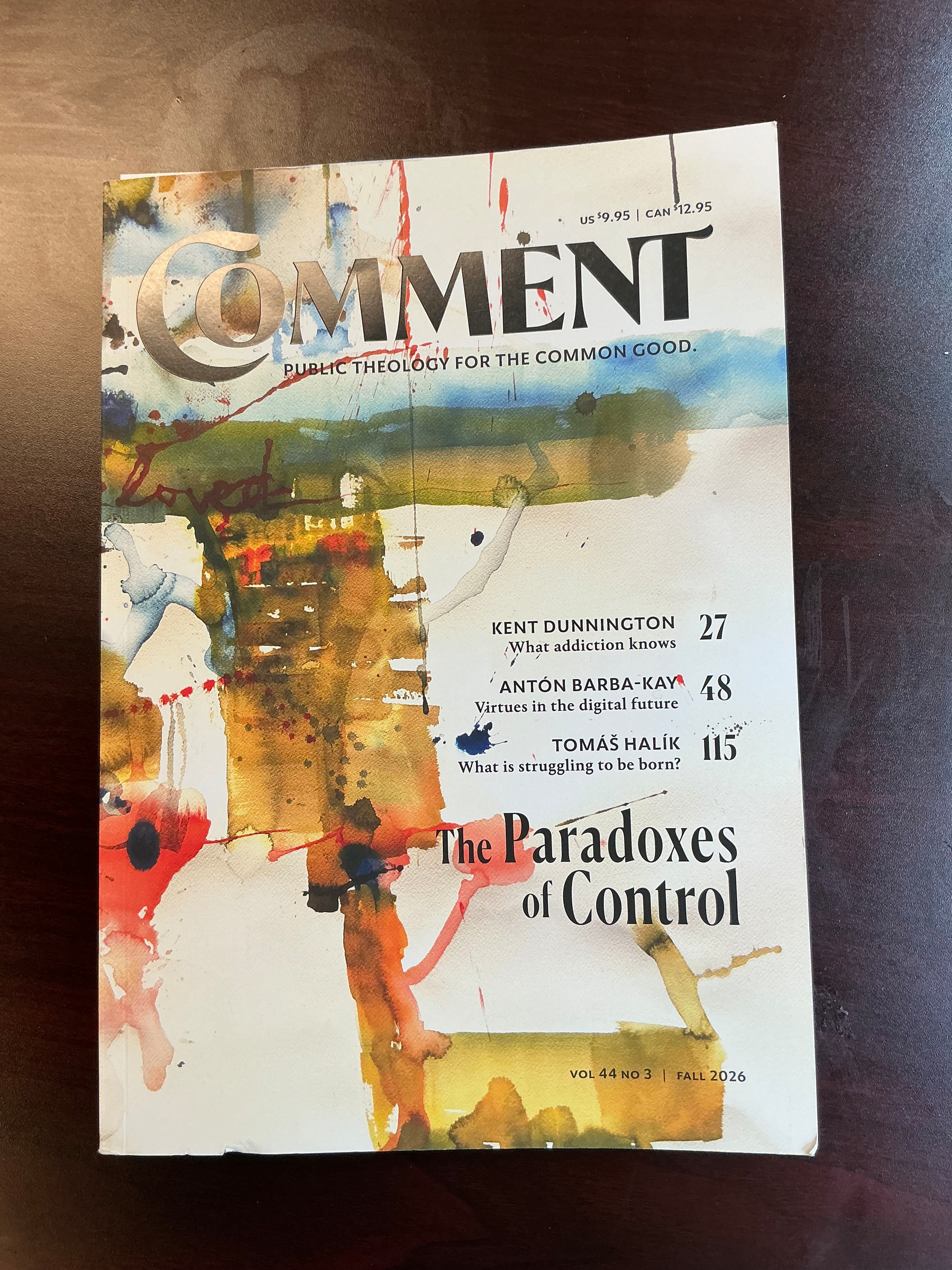
I’m sure I’ll recommend every page from cover to cover, but right now I think Kent Dunnington’s piece on “Addiction, Control, and Recovery in the Modern World” is one you should share with all your friends.
Fresh off a few conversations about teachers who use AI, teachers who instruct their high school kids to run their essays through an AI program before handing it in, and one parent who was instructed to buy headphones for his kindergartener(!) to use with the tablets the school provides — Evan Rosa took the words right out of my mouth:
I recall from 2006 and the first iPhones on, the pacifying nature of holding a … I guess it would have been Blue’s Clues at the time … up in front of a child in their backseat who’s screaming, and just out of a desire for some sanity, you turn on that blue light and you dazzle them with this thing. And then you hand it to them and they start interacting and you start congratulating them for how easily they got it and how amazing it is that kids know how to pinch to enlarge — there is a tragic and so… such a sad and, I think at an aesthetic level, an ugly thing about that.
Presented without comment:

Me: Nope, nope, nope. We really have to go. So we can do this the easy way or we can do it the hard way.
My 2 1/2-year-old: Actually, I wanna do it the hard way.
After a busy work weekend, including 4 1/2 hours of driving, I finished listening again to that Joe Rogan podcast with Sebastian Junger from 2017. Even better than I thought. Regardless of agree-disagree, it’s all good stuff. I sometimes share a podcast that I just think anyone could easily share. But here I think that if you want to understand why so many people listen to Joe Rogan, particularly some of the perfectly normal reasons people got into him in the first place — and this is a big if, if you want to understand — it’s not a bad place to start.
What’s on the teeveeee, kids?