Posts in: Books

Finished reading: Man in the Modern Age by Karl Jaspers šŸ“š

The significance of entering into the world constitutes the value of philosophy. True philosophy is not an instrument, and still less is it a talisman; but it is awareness in the process of realisation. Philosophy is the thought with which or as which I am active as my own self. It is not to be regarded as the objective validity of any sort of knowledge, but as the consciousness of being in the world.

I would love to do a better write-up here, but time ain’t on my side. Instead, some notes I took along the way:

  • Just about everything I feel about the modern precarity of being, knowing, doing, nicely contained in a little book nearly 100 years old; just about every criticism of the modern age — the modern age even up to now — that I have ever heard or felt is right here, written in 1930. Our modern malady is a lot older than the iPhone or the internet or the ubiquity of home televisions.
  • Of course, there’s nothing in the book about AI, but several passages could easily be aimed at it. And I think every single problem we face with AI is essentially a problem that preceded it.
  • Of course, there’s nothing new under the sun and whatnot. Most meaningful day-to-day questions were in some form faced by humans thousands of years ago as well as now. (No chronological snobbery, even in our maladies.) But if there are some forms specific to the ā€œmodern ageā€ — and I believe there are a few — none of them are essentially new to our century or to my generation.
  • Though many have taken the critique to greater depths and aimed at more specific targets of modern technology, Jaspers’ precedes Ellul, Mumford, even Heidegger, I believe. (I’m certain other writers preceeded Jaspers as well. You may even be thinking of some right now that make all this seem obvious.)
  • It’s hard not to see Jaspers as helping to lay some of the groundwork for 20th-century writers who show a desperate need for, if not anarchism, at very least James C. Scott’s ā€œanarchist squint.ā€ When Jaspers says that, against the ā€œherding of the massesā€ and the ā€œincreasing technicisation of daily life,ā€ people cling to a ā€œprimitive world with increasing tenacity,ā€ he means it as a good thing: what he means by ā€œprimitive worldā€ is mutual, unofficial trustworthiness and ā€œreciprocal obligations.ā€
  • Though not simply a nay-sayer of liberalism, he clearly (fore)saw the same lack we are experiencing: the vacancy of liberalism’s meaning for life.
  • I’m currently, along some other fine microbloggers, who are miles ahead of me in this (and probably every) regard, reading Paul Kingsnorth’s Against the Machine. So it shouldn’t be surprising that there is copious overlappage. Take this for example, the language of which will probably give away Jaspers, but the substance could easily be Kingsnorth today:

    The present moment seems to be one which makes extensive claims, makes claims it is almost impossible to satisfy. Deprived of his world by the crisis, man has to reconstruct it from its beginnings with the materials and presuppositions at his disposal. There opens to him the supreme possibility of freedom, which he has to grasp even in face of impossibility, with the alternative of sinking into nullity. If he does not pursue the path of self-existence, there is nothing left for him but the self-willed enjoyment of life amid the coercions of the apparatus against which he no longer strives. He must either on his own initiative independently gain possession of the mechanism of his life, or else, himself degraded to become a machine, surrender to the apparatus.

  • Jaspers may have, in philosophical terms, predicted the mid-life crisis. šŸ™‚
  • In the end, he gives a decent description not just of our dilemma but of a responsible Yes to the world.

Finished reading: In Search of the Human Face by Luigi Giussani šŸ“š

Splendid. I haven’t read a devotional-type book like this in quite a while. And never one so thoroughly quotable.

This [unbearableness due to the clamor of our weakness] is a great occasion for love, a great occasion for a loving affirmation.

The truth about our humanity cannot be reduced to the observation of its misery but to the wondrous and exalting announcement that this misery is loved. This loving, strong, and faithful presence, more than the fickle and vulnerable fragility that is the substance of humanity when left to itself, is our true richness.

Hopefully I’ll follow up with a few more, and perhaps a larger sample of quotes.


Currently Reading: In Search of the Human Face by Luigi Giussani šŸ“š

Nothing is as fascinating as the discovery of the true dimension of my I, nothing so rich in surprises as the discovery of my own human face.

Absolutely excellent so far. In comparison, today I was reading this review of Allison Pugh’s The Last Human Job and a few things stood out — the magic and grace of connective labor being increasingly ā€œdisenchanted and automatedā€; Wall Street and Silicon Valley being ā€œepicenters of the toniest nihilismā€; and there’s this lovely view from the top:

As one venture capitalist muses, people ā€œare interchangeable and not very mysterious, with behavior reducible to sixty-five steps.ā€ Indeed, one technologist envisions the brave new world of cyber-connection as one in which we fleshly plebeians will have to choose whether we want to be ā€œpets or livestock.ā€

But the review ends with this:

The drive to automate even the most intimate of human connections reflects one of the more insidious currents of our day: the desire to enter a prosthetic sublime, shorn of all the ineptitude and mortality of our condition. If we continue to make the work of connection a matter of data and algorithms—from the arduous work of therapy to finding romance on dating apps—we would certainly make our lives more rational, streamlined, and efficient. But if Pugh and her connective workers are right, we would also forfeit moments of ā€œmagic,ā€ communion, grace, and love—experiences that open us up to the boundless and the ineffable. Perhaps, as those terms suggest, we defend the human best when we recall what is divine about ourselves.

Giussani seems just such a defender of the human, and a powerful one. So much of the above is adressed (all of it, even?) just in this short excerpt from the introduction. I even think it would be worth downloading a sample from Kindle just read the ~7-page introduction. There was also an excellent review of the book in Comment.


Perhaps… defining the ends of life requires a hermeneutic inquiry, which must grope toward an adequate language in which these ends can be fully brought to light.

Finished reading: Cosmic Connections by Charles Taylor šŸ“š

I doubt I’ll find the time or mental capacity to elaborate on this any time soon, but much of this book was, for me, a wonderful extension and significant deepening of something from the introduction to his A Secular Age, a quote that, for reasons I sort of mentioned here, I very often think about, probably more so than any other from Taylor:

We are deeply moved, but also puzzled and shaken. We struggle to articulate what we’ve been through. If we succeed in formulating it, however partially, we feel a release, as though the power of the experience was increased by having been focused, articulated, and hence let fully be.

I’ve tried for the last several days to summarize a little more than this, but… too many rabbit roles, not enough time. So I’ll coin toss on a good excerpt.

It was probably just me, but I had a couple false starts with this book and it didn’t really come alive until a couple hundred pages in, beginning with the chapter on Rilke, I think. (On a practical note: The 600 pages are not nearly as daunting as those of A Secular Age. For one thing, the footnotes, which are never longwinded, are where God intended them to be, at the bottom of the page so you don’t have to flip endlessly to the back. There are also long sections where poems are given in their original German or French, followed by English translations. And best of all, the poems are always given plenty of room on the page to breath.)

I found all the chapters where he focused on one poet — Rilke, Beaudelaire, MallarmĆ©, Eliot, Milosz — very enjoyable.

In any case, Czeslaw Milosz wins the toss:

In ages past, we often thought that religiously inspired philosophers were best suited to define to define this latter element (for Catholics, the work of Aquinas). In the contemporary world, we look to political scientists or historians to discern the trends. The daring idea that Milosz puts forward is that a poet can do that; and a poet with the means of a poet: that is, not the study of learned documents, works of Plato and Aristotle, or the works of social science; but the poet’s way of articulating the deepest intuitions that come to him/her as a spiritual being contemplating our present condition.

Which may simply say — at least says — along with the likes of William Carlos Williams and Nadezhda Mandelstam: before science, before philosophy, look for the ā€œgroping-toward-an-adequate-languageā€ that is good poetry; it will bring you a lot closer to genuine reality.


Finished reading: Evicted: Poverty and Profit in the American City by Matthew Desmond šŸ“š

One city must build; another must destroy. If our cities and towns are rich in diversity—with unique textures and styles, gifts and problems—so too must be our solutions.

Whatever our way out of this mess, one thing is certain. This degree of inequality, this withdrawal of opportunity, this cold denial of basic needs, this endorsement of pointless suffering—by no American value is this situation justified. No moral code or ethical principle, no piece of scripture or holy teaching, can be summoned to defend what we have allowed our country to become.


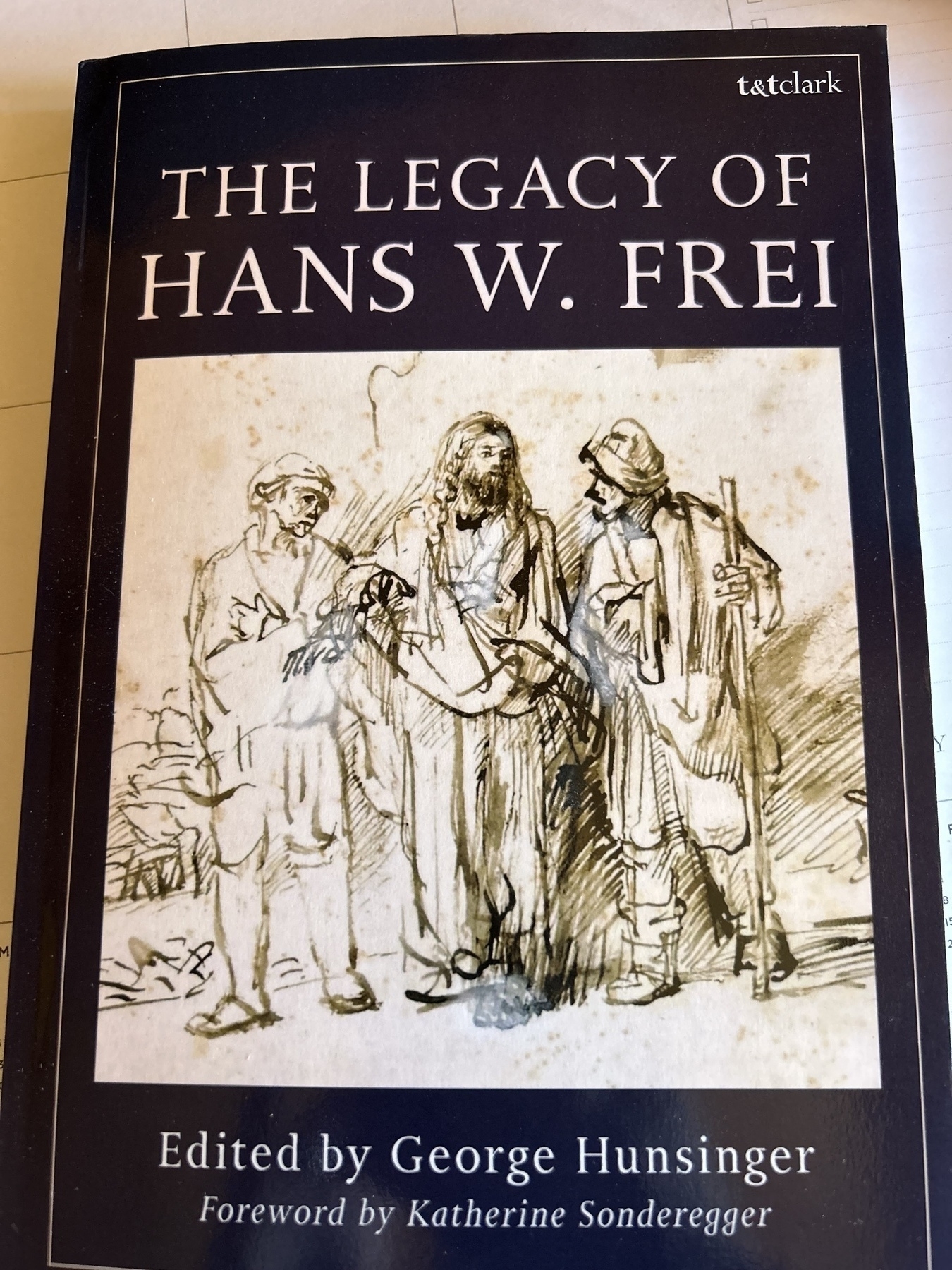
šŸ“š Happy New Book in the Mail Day! (I love it when a forgotten preorder shows up in the mailbox.)


Got pulled over Friday night for the first time in years. Nine years if memory serves, which is a pretty good stretch considering that in the years preceding that I estimate being pulled over between 30 and 50 times. (Don’t ever let people tell you you can’t change šŸ™‚)

Last week’s warning (phew) could have been avoided if I had

  • put my front license plate on (don’t like it because it makes the collision sensors wonky)

  • consented to have the vehicle pass an inspection (disagreed with the service department about some very mild uneven tread wear and the necessity v. wastefulness of replacing tires which have plenty of good tread left on them)

  • bothered to get the car reregistered … last October (oops)

I’m not a rebel, I’m just stubborn.

Which reminds me…

I’m currently reading: A Living Spirit of Revolt: The Infrapolitics of Anarchism by Žiga Vodovnik šŸ“š

Some initial thoughts and sparks flew…


Currently Reading: On the Natural History of Destruction by W.G. Sebald šŸ“š

These essays are made up of a series of lectures Sebald gave in Zurich in the autumn of 1997. The letters of response to which, as Sebald mentions in the foreword, were telling.

The inadequate and inhibited nature of the letters and other writings sent to me showed, in itself, that the sense of unparalleled national humiliation felt by millions in the last years of [World War II] had never really found verbal expression, and that those directly affected by the experience neither shared it with each other nor passed it on to the next generation.Ā 

This is in some ways perfectly understandable, he adds, ā€œgiven the force of the absolute uncertainty that emerged from our order-loving minds.ā€

In spite of strenuous efforts to come to terms with the past, as people like to put it, it seems to me that we Germans today are a nation strikingly blind to history and lacking in tradition. We do not feel any passionate interest in our earlier way of life and the specific features of our own civilization …

I am not German and I cannot confirm what Sebald says about German culture. But I can say that I recognize something of what he is talking about in my own culture. And I will certainly be reading this book, as I’m sure Sebald intended, with at least one eye on the fact that he acutely describes a more universal problem, and one that we are intensely suffering from in the U.S. right now.

ā€œWe are always looking and looking away at the same time,ā€ he says, and so we are left with ā€œa half-consciousness or false consciousnessā€ that serves to consolidate moral resources in a culture that has been, or ought to have been, morally discredited. ā€œThe redefinition of their idea of themselves … was a more urgent business than depiction of the real conditions surrounding them.ā€Ā 

Sebald notes that, in response to these lectures, he received ā€œsharp reprimands from people unwilling to see that … a basic stance of opposition and a lively intelligence … could easily turn into more or less deliberate attempts to conform, and that later a man in the public eye … would therefore have to adjust his presentation of his career, through tactful omissions and other revisions.ā€

From my perspective, this is not only shockingly and obviously the case in American culture and politics, but it is in no way limited to the ā€œman in the public eye.ā€ To expand on Sebald’s terms: Every single citizen is preoccupied — at first naturally and then, apart from great effort, militantly — with an ongoing and retrospective improvement of the self-image that they wish to hand out and to hand down. The result is the inability of an entire generation, if not multiple generations, to describe what we see and to convey it to each other’s minds.


Finished reading: Including the Stranger: Foreigners in the Former Prophets by David G. Firth šŸ“š

This managed to be both a quick read and an excellent depth of study — one, in fact, much more biblically scholarly than anything I have read in a while or that I expected to find here. I don’t recall how I came across this one, but the title attracted me for what should be obvious reasons.

Here’s Firth on why he focuses on the narrative materials of the Former Prophets rather than the legal texts:

There is value in a more focused study that considers the contribution of the Old Testament’s narrative materials. Walter Houston has pointed out that laws can change a society’s behaviour only when justice is taught and not only enforced, and one of the key ways in which this teaching happens in the Old Testament is through its narrative materials.

There are, however, more fundamental reasons for turning to Israel’s wider narrative traditions. One important point is that the law provides not an ethical maximum but rather a minimum. That is, law recognizes a problem that needs to be addressed, but what it provides is the least that should be done, not necessarily the ethical goal towards which a people should aspire. By contrast, [Gordon] Wenham has argued that the narrative texts of the Old Testament are didactic and so try ‘to instil both theological truths and ethical ideals into their readers’, and that therefore the narratives offer a form of paradigmatic ethics. […]

In the end, although there is no one method and there are some figures whose status is never entirely clear, many foreigners are mentioned in the Former Prophets, with many of these included among the people of God so that the boundaries of this people is constantly being challenged.*

While I wish Firth had said more in the closing pages, what he has done — what he draws out of the text and into proper attention — is remarkably important.

A few summary take-aways:

  • Ethnicity itself is never a problem. (Hear ye, hear ye, fellow descendants of those belligerently god-awful — but sometimes fun — ā€œNew Atheismā€ debates: Ethnicity in the Bible is never a problem.)
  • Often within the narratives, groups of people or even prominent characters themselves who we today might assume to be ethnically Israelite are not.
  • Not only are ā€œforeignersā€ generally viewed in a positive light, but they are often, and in some narratives usually, the ones who understand Yahweh and his purposes much better than ā€œGod’s peopleā€ do.
  • The only Israel in the text that matters — and by extension, for Christians, the only church that matters — is neither ethnic nor geographical nor national. The only one that matters ā€œis the the one that is continually reminded that their existence is for others, for foreigners.ā€